IEC Health Insurance Canada: Requirements & Best Options 2026
IEC Health Insurance Requirements (IRCC Rules)
Your IEC* health insurance must:
✔ Cover your entire stay in Canada
✔ Include medical care, hospitalization and repatriation to your home country
If your insurance is valid for less time than your intended stay:
- Your work permit will be issued for that shorter duration
- You cannot extend it later
>>See IRCC’s official requirement here
*These requirements apply to all IEC participants (Working Holiday, Young Professionals and International Co-op categories).
Best IEC Health Insurance Options for Canada

Looking for Working Holiday insurance? Below are some insurance options commonly used by IEC participants.
Compare the options carefully, as coverage and eligibility requirements vary between providers. For example, some providers require you to still be living in your home country when you purchase the policy.
Always read the policy details carefully before buying.
If you have a pre-existing condition, contact the provider directly to discuss any questions or concerns you may have.
The list contains affiliate links. We do not represent any of the insurance companies listed. This is for information only. When you buy insurance through those links, we may earn an affiliate commission but it will not cost you extra. Thanks for your support!
True Traveller
- For citizens from Europe and UK
- Available up to 24 months
- Can be extended by 12 months with a discount
- Already Travelling policy available
- Public Liability included in premium
- Additional coverage for winter sports possible
⚠️ NEW at True Traveller:
True Traveller offers refunds for unused months if you return home earlier, under the following conditions:
🔵 You’ve been away for less than 12 months
🔵 You haven’t filed any claims
🔵 The policy wasn’t an ‘already travelling’ policy
🔵 Proof of trip home is required (return flight)
Best Quote
- For all IEC countries
- Available up to 24 months
- Already Travelling policy available
- Website that helps find the best coverage
⚠️ Other key points that stand out at Best Quote:
🔵 BestQuote is a well-established Canadian broker offering a variety of affordable policies
🔵 Especially popular among IEC participants from Australia and New Zealand
🔵 Offers a 25% cashback of remaining premiums once you sign up for provincial health care
🔵 Provides access to Canadian primary care through Maple’s virtual healthcare app
🔵 Offers a partial refund if you return home early and have not made any claims
World Nomads
- For over 100 countries
- Available up to 12 months
- Already Travelling policy available
- Covers more than 150 adventure sports
- Over 20 years in travel insurance
IEC Health Insurance Canada FAQ: General Questions
Last updated: September 2026

When should I buy IEC health insurance for my Working Holiday?
Wait until you’ve received the POE letter (IEC approval) and finalize your travel plans before purchasing insurance.
However, make sure you purchase your IEC health insurance before you travel to Canada, as you’ll need to show proof of coverage when you arrive at the border.
Does IEC health insurance need to include repatriation?
Yes — IEC rules require your insurance to include:
- Medical care
- Hospitalization
- Repatriation (being sent home in an emergency)
Without repatriation coverage, your insurance will not be accepted.
How long must IEC health insurance be valid?
Your insurance must cover the full duration of your intended stay.
For example, if your country allows a 2-year stay and you plan to remain for the full 2 years, your insurance must also be valid for the entire 2-year period.
Can I buy two 1-Year IEC insurance policies?
When preparing for your IEC stay in Canada, it is important to ensure you purchase an IEC insurance policy that covers the full duration of your stay.
If you are from a country eligible for a two-year work permit and cannot find a provider that offers a single two-year policy, you can purchase two separate one-year policies. There must be no gap between the two coverage periods.
The second policy must be an “already travelling” policy, as it will take effect once you are in Canada. This can be more expensive. For this reason, I recommend choosing an insurer that offers a two-year policy.
In addition, this is actually officially confirmed by IRCC > here <:
“Participants can present 2 consecutive health care insurance policies if they were not able to purchase 1 policy to cover the entire length of their work permit.”
What happens if my IEC insurance expires early?
If your insurance policy does not cover your full intended stay, your work permit will expire at the same time as your insurance. You will not be able to extend it later, even if you originally planned to stay longer.
For example, if you arrive with insurance valid for only 6 months, your work permit will also be issued for 6 months. After that, you will need to leave Canada or apply for another work permit.
What do border officers check in my IEC insurance policy?
Besides the name matching your passport, the other most important parts of the policy are:
- Start and end dates (must match your work permit length)
- Repatriation coverage included
- Policy must be in English or French
Bring a printed copy of your IEC policy showing medical, hospitalization, and repatriation coverage.
Printed copies are important because some border officers may not accept documents on your phone. In some cases, they may take your passport and documents and ask you to wait, so having paper copies avoids issues.
What happens if I don't have IEC insurance when I activate the work permit?
You must have valid health insurance when you activate your work permit upon entering Canada.
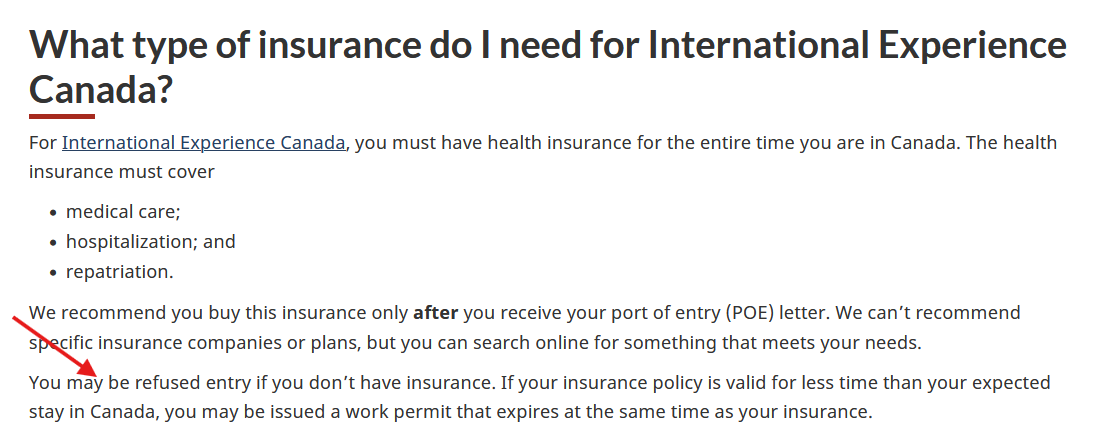
When you arrive at the border with your POE letter and all other required documents, border officers may request proof of insurance. If you are unable to provide valid IEC insurance coverage, IRCC states > here <:
“You may be refused entry if you don’t have insurance.”
How much does IEC insurance cost for Canada?
IEC health insurance for Canada usually costs between $600 and $1,800 CAD per year, depending on your age and the level of coverage you choose. It’s worth comparing a few options to make sure you’re properly protected—especially for things like hospital visits and repatriation back home.
IEC health insurance vs. IEC travel insurance — what’s the difference?
If you’re heading to Canada on an IEC, you’ll probably hear both terms, and yeah, it can get confusing. People often mean the same thing, but there’s a small difference worth knowing.
Health insurance covers you if you get sick or injured—things like doctor visits, hospital stays, prescriptions, or emergencies.
Travel insurance includes that medical coverage, but also has your back for travel hiccups. For example trip cancellations, delayed flights, lost luggage.
In simple terms:
Health insurance = just medical
Travel insurance = medical + travel protection
In relation to the IEC program:
An insurance that includes emergency medical coverage is the mandatory requirement, but additional travel-related benefits, such as coverage for trip cancellation, lost luggage, or flight delays, are optional extras, not required by immigration.
What is the reason behind this strict requirement for the IEC program?
Firstly, and most importantly, with this requirement, the Canadian government wants to make sure you are not a burden on Canada’s health care system and that you have a chance to get back to your home country in case of injury, illness or death.
If you have a bad accident and need to be flown home for further treatment and need a flight with doctors and nurses, the Canadian government will not pay for your repatriation.
Secondly, many IEC participants who come to Canada are not eligible for provincial health care or not eligible right away. Specifically the ones who come with an open work permit under the Working Holiday category who explore Canada and travel and work in many other provinces. Therefore, making them ineligible for provincial health care.
Each province has its own rules for health coverage, and they can be quite strict. For example:
- Québec does not insure Working Holiday travellers.
- Ontario and British Columbia require a full-time job for at least 6 months before you can even apply.
As you can see, you might not be eligible for provincial coverage or not right away. Your IEC health insurance ensures you’re covered from the moment you arrive.
IEC Health Insurance Canada FAQ: Coverage Questions
It’s always best to contact your health insurance provider directly to confirm what is covered.

Does IEC insurance cover sports and adventure activities?
If you plan to ski, snowboard, or take part in adventure sports during your IEC stay, check your policy before participating. Make sure the specific activity is covered and that you understand any restrictions, such as staying on marked or patrolled ski runs. For example, some IEC insurance policies offer snow-sports coverage as an optional add-on.
Does IEC insurance cover manual labour?
Most travel health insurance policies do not cover you while you are working.
However, if you are legally employed and your employer deducts taxes, EI, and CPP from your paycheque, you should be covered for work-related injuries through Workers’ Compensation. This is workplace insurance that employers are required to pay for. This insurance will also pay for lost wages if you cannot work due to the work injury.
Workers’ Compensation only covers you while you are working.
For example, if you work at a ski resort, you are covered if you are injured while doing your job. But after your shift, if you go skiing for fun, Workers’ Compensation does not cover that injury. Your personal travel insurance would need to cover you instead.
Does IEC insurance cover pre-existing conditions?
Coverage for pre-existing conditions varies by provider, so check the policy details before buying. If you have a pre-existing condition, you must disclose it when applying. Not doing so could result in denied claims or cancellation of your coverage.
Heads up: If an online quote calculator gives you an error or doesn’t offer coverage after you enter a pre-existing condition, don’t assume you’re automatically ineligible. Contact the insurance provider directly. Depending on your condition, you may still be able to get coverage after discussing it with the insurer.
Does IEC insurance cover prescription medication?
IEC insurance policies generally cover prescription medications if they are needed for emergency medical treatment, but coverage depends on the provider.
An emergency doesn’t only refer to severe cases like broken bones or hospital stays. It can also be an unexpected health issue that comes up suddenly, such as infections or a severe cold where you may need medication or treatment.
However, if you have a pre-existing condition that requires regular checkups or ongoing care, it may not be covered, so it’s best to confirm the details directly with your insurance provider.
IEC health insurance is mainly designed to cover unexpected medical issues. As a result, it usually does not include routine or preventive care, such as annual checkups or regular doctor visits.
IEC Health Insurance Canada FAQ: Scenario-Based Questions

Is my credit card insurance ok to activate an IEC work permit?
Unfortunately, no. Credit card travel insurance typically covers trips for a limited period, such as 45, 60, or 90 days.
To activate your IEC work permit, you must have health insurance that covers the entire duration of your intended stay in Canada. If you only have insurance for 45, 60, or 90 days, your work permit will be issued for that same length of time.
For example, if your credit card insurance covers you for 90 days, you will receive a 90-day work permit. You will not be able to extend your work permit later.
Do I need health insurance for a Young Professional work permit?
Yes. The Young Professionals category is part of the IEC program, so you still need IEC health insurance that includes repatriation to your home country.
Even if you will have provincial health care or employer health benefits, this is not enough. That’s because these plans do not cover repatriation, so they do not meet IEC insurance requirements.
Therefore, to avoid issues when you arrive in Canada, make sure your insurance includes repatriation and covers the full length of your work permit.
I have a POE (approval), but I want to visit first, do I need health insurance?
After receiving your POE (Port of Entry) approval through the IEC program, you have up to 12 months to enter Canada and activate your work permit.
A lot of people choose to come over first as a visitor—travel a bit, explore different cities, and look for a job or place to live—before activating their permit.
You don’t need IEC health insurance if you’re entering Canada just as a visitor. However, it’s still a really good idea to have travel insurance, because you won’t be covered by Canada’s public healthcare while you’re visiting.
Check out the IEC health insurance options mentioned >> above.
I will only travel to Canada to activate the work permit, then return home to come back later
While this is allowed and many IEC participants choose this option, there are two important things to keep in mind:
You must have health insurance that covers the full length of your work permit when you arrive in Canada. For example, if you’re eligible for a two-year IEC work permit (such as participants from the UK), you must show proof of a two-year health insurance policy to receive the full two-year work permit.
Check the policy’s conditions carefully. Many insurance policies become invalid if you return to your home country during the coverage period. Always read the fine print so you understand any restrictions before you buy.
My insurer only offers a 1-year policy with automatic renewal, instead of a 2-year policy.
⚠️ This is a risky option for the IEC program and not recommended.
When you arrive in Canada and activate your IEC work permit, the border officer will check your proof of health insurance. The work permit will only be issued for the duration of your prepaid insurance—not longer.
So if you fully paid for only 1 year, your work permit will be issued for 1 year only, even if you’re eligible for a 2-year stay.
For this reason, it is strongly recommended to choose an insurer that offers a fully prepaid 2-year IEC policy if possible. This ensures you receive the full length of your work permit.
Your insurance certificate must clearly show the full length of coverage (for example, 24 months) when you enter Canada. If not, your work permit will be shortened, and you could lose a valuable part of your IEC stay.
I don't plan on staying the maximum time, can I take a shorter insurance policy?
If you’re absolutely sure you’ll only stay in Canada for a short time, you can buy health insurance just for that period — for example, 6 months. This is common for travellers who come for a winter or summer season and then return home for good, with no plans to come back.
Just remember: your work permit will be issued for the same length as your health insurance. If you buy 6 months of insurance, you’ll receive a 6-month work permit — and it cannot be extended later.
However, if you’re not 100% sure how long you want to stay, it’s usually not a good idea to choose a shorter policy. Many travellers arrive planning a short trip, then fall in love with Canada and want to stay longer.
If there’s any doubt, it’s safer to get coverage for the full eligible period from the start.
Many insurance companies offer refunds for any unused months if you leave Canada earlier than planned. Check those options above.
What happens if I extend my stay in Canada?
If you extend your stay, you must also extend your insurance or get a new policy to avoid any gap in coverage. Your new work permit validity will depend on it.
For example, if you are eligible and apply for another IEC work permit, you still need to have valid insurance for the entire duration of your stay, even if you are already in Canada.
If you switch to a non-IEC work permit or apply for a visitor record, insurance is not required, but it is strongly recommended. Healthcare in Canada can be very expensive without proper coverage, especially in case of unexpected medical issues.
I am already in Canada.
Can I use provincial healthcare instead of IEC health insurance?

Provincial health care on its own does not meet the IEC insurance requirement.
The main reason is simple: repatriation coverage is mandatory for IEC participants. This means your insurance must cover the cost of returning you to your home country in case of serious illness, injury, or death.

For example, if you’ve enrolled in MSP (Medical Services Plan) in British Columbia or OHIP (Ontario Health Insurance Plan), these plans cover basic healthcare services within the province, but they do not cover repatriation to your home country.

Many travellers think that provincial health care covers everything, but that’s not true.
Here are a few examples from my personal experience, as someone who travels often — just like many IEC participants do.
We live in Alberta and have Alberta Health Care.
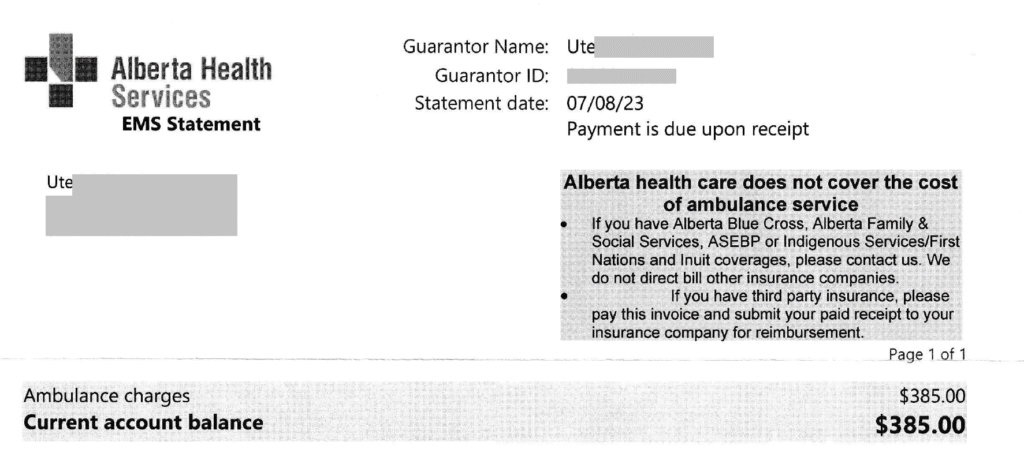
Provincial health care plans don’t cover ambulance services. I learned this the hard way, I paid $385 out of pocket for an ambulance in Alberta because Alberta Health didn’t cover it.
Your IEC health insurance steps in where provincial plans don’t. If you have a medical emergency or an accident, it covers your ambulance costs, so you avoid surprise bills.
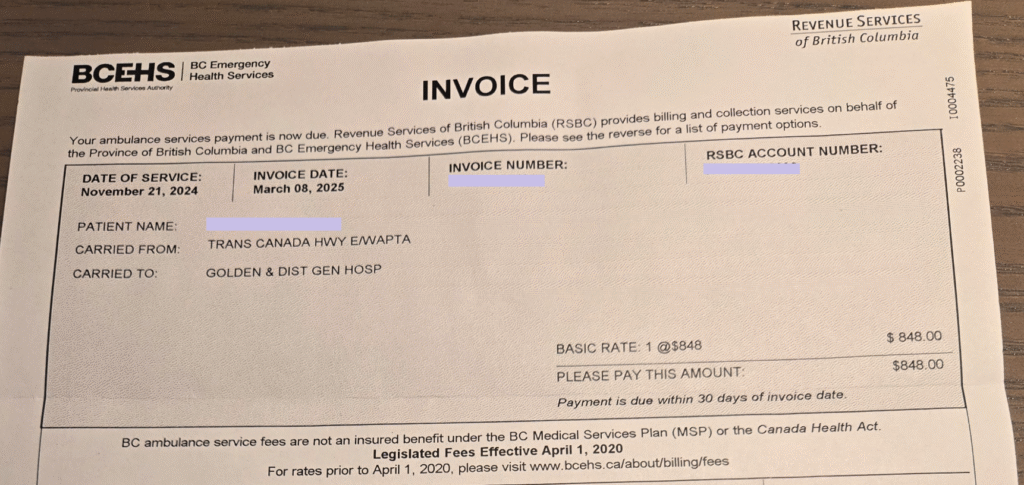
Also, provincial health care only covers you within your home province. If you travel or visit another province, you need extra “out-of-province” coverage. For example, I received an $848 ambulance bill in BC for an accident, even though I permanently live in Alberta and have Alberta Health care.
With IEC insurance, you’re fully covered across Canada, no matter which province you’re in.
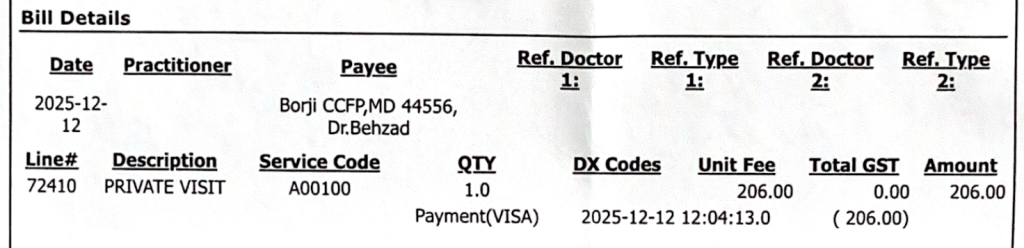
During a trip to Vancouver from Calgary in December 2025, I unexpectedly got sick and had to visit a walk-in clinic. The visit ended up costing me $206 out of pocket. Unexpected medical expenses can happen anytime while travelling, which is why having IEC insurance is so important.
Lastly, provincial health plans don’t cover dental care or vision care. Fortunately, your IEC health insurance provides emergency dental, with limits depending on the terms of your policy, so you’re most likely protected for emergency dental expenses.
Can I cancel my IEC health insurance after getting provincial health care?
No. Health insurance is mandatory for all three categories of the IEC program and must cover your entire stay in Canada.
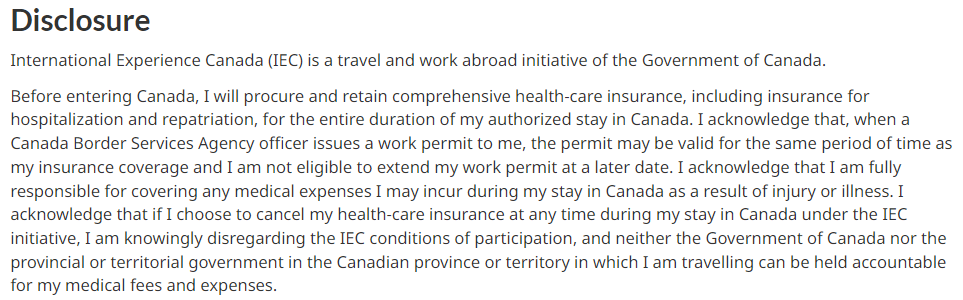
If you cancel your IEC health insurance, you are breaking the conditions of your work permit. This can lead to your permit being cancelled or declared invalid. At the end of your IEC application, you signed a disclosure confirming that you would purchase and maintain proper health insurance. Saying “I didn’t know” will not be accepted as an excuse.
Some insurance companies will report cancellations of a health insurance to IRCC
This could trigger a review of your work permit status. Keep your health insurance active for your full stay. It’s not optional.
If I cannot cancel; can I still have IEC insurance and provincial health insurance at the same time?
Yes, you can.
Provincial health care can be a great add-on to your IEC health insurance. It usually covers routine medical needs like annual check-ups, doctor visits, and bloodwork — things that most travel insurance plans don’t include.
However, it doesn’t cover everything.
Most importantly, provincial health care does not cover repatriation. If you become seriously ill, badly injured, or in the worst case pass away, the cost to bring you back to your home country would fall on your family. These costs can easily run into thousands of dollars.
It’s not something you’d want your loved ones to deal with — especially just to save a few hundred dollars a year on proper travel insurance.
I am already in Canada and have employer benefits from work, can I use those?
Employer benefits are a nice extra when you’re working for a company. They often help pay for things like dental care, vision, massages, acupuncture, and more.
But if you’re applying through the IEC program, employer benefits do not count as valid health insurance. Here’s why:
You need provincial health coverage first.
Most employer plans only work if you already have provincial health insurance. If you don’t qualify for provincial coverage yet, your employer benefits may not cover you at all. Always check the details carefully.
Repatriation home is not covered.
Employer plans usually only cover travel back to your Canadian home province (or somewhere within Canada). The IEC program requires insurance that covers travel back to your home country, not just to Canada.
Coverage stops if your job ends.
If you quit or lose your job, your employer benefits end right away. That could leave you without any insurance.
Because of these limits, employer benefits cannot replace the health insurance required for your IEC work permit. You still need separate IEC health insurance for your full stay.
Planning your IEC Working Holiday in Canada?
