How to Buy a Used Car or Camper in Canada (Guide for IEC Participants)
Buying a car or small camper on an IEC (International Experience Canada) can feel a bit overwhelming at first. The system is fairly structured, but it has a few “Canadian specifics” that matter a lot—especially around insurance and registration.
This guide will focus on British Columbia, since many backpackers begin their Canadian journey in this beautiful province.
It’s important to know that each province has its own insurance system and different requirements, so the rules can vary depending on where you buy your vehicle.
Buying a car in BC - Step by step
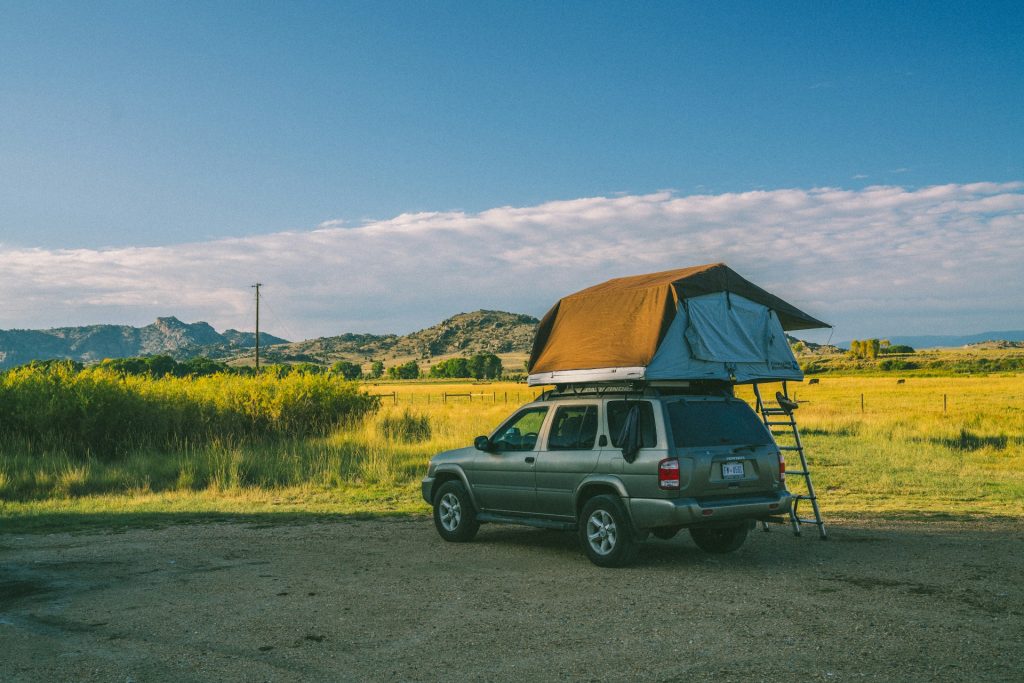
Tip: Focus on the condition of the vehicle first. A reliable van with a basic bed setup is often a much better purchase than a beautifully converted camper with mechanical problems.
Set your budget
Before buying a car in Canada, it’s important to plan your budget so you don’t get caught off guard by extra costs. Remember that the price of the car is not the final cost. You will also need to pay extra fees such as taxes, registration, and insurance.
For a basic used car (older but reliable), most people spend around $5,000 to $12,000 CAD. This usually gets you something that is still good for daily driving, but with higher mileage. Expect most backpacker cars to have over 200,000 km on the odometer.
For a mid-range used car (lower mileage, more reliable), expect about $12,000 to $25,000 CAD. This is often the “safe sweet spot” for long-term use.
If you’re looking at camper vans or converted vehicles (popular with travellers), prices are usually higher. A rough range is $10,000 to $30,000+ CAD for older camper conversions, and $30,000 to $70,000+ CAD for newer or professionally built setups.
Find the perfect car - Do your research
For backpackers in Canada, these are some of the most common vehicles converted into campers:
Minivans
- Dodge Grand Caravan
- Chrysler Town & Country
- Toyota Sienna
- Honda Odyssey
These are the most budget-friendly option and very popular among backpackers. With the rear seats removed or folded down, there is enough space for a simple bed platform and storage boxes.
SUVs with Sleeping Setups
- Toyota 4Runner
- Subaru Outback
- Honda CR-V
Some travellers choose SUVs and create a simple sleeping platform in the back. This works well for shorter trips or solo travellers who prioritise fuel efficiency over space.
Cargo Vans
- Ford Econoline
- Chevrolet Express
- GMC Savana
These older cargo vans are common in Canada and often appear on Facebook Marketplace already converted by previous travellers. They offer more living space but tend to have higher fuel consumption.
Modern High-Roof Vans
- Mercedes-Benz Sprinter
- Ford Transit
- Ram ProMaster
These are the dream vans of many vanlifers. They provide enough room to stand up inside and can be fitted with full camper setups including kitchens and solar systems. However, they are significantly more expensive to buy.
Our perfect campervan
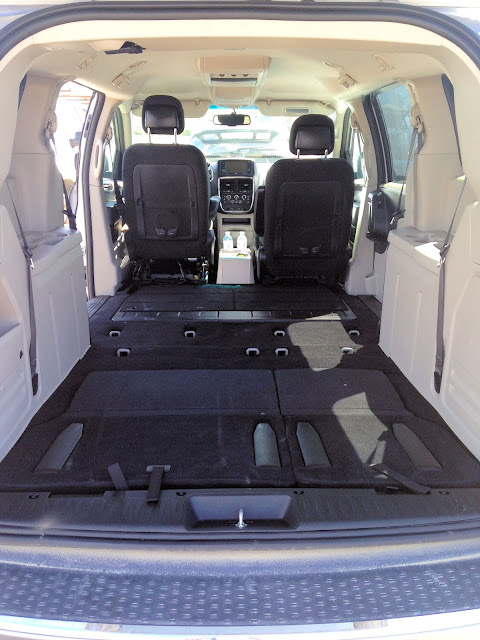
Our personal favourite was the Dodge Grand Caravan with a “Stow ‘n Go” feature.
The rear seats fold completely into the floor, giving you around 2 metres of usable space to build a simple sleeping setup without having to remove any seats.
Since Grand Caravans are very common in Canada, replacement parts are generally easy to find, and mechanics are familiar with them.
They are also one of the most common vans in Canada, which means there are usually plenty available to buy and they can be easier to sell again once your trip is over.
If you are looking into a newer model, the Dodge Grand Caravan was discontinued in 2020. They are now sold as Chrysler Grand Caravan, which continues to offer the Stow ‘n Go feature.
Where to find the perfect car
Online platforms
- Facebook Marketplace – by far the most active for private camper sales
- Craigslist – still widely used in Vancouver and surrounding areas
- AutoTrader.ca – better for dealership listings and certified vehicles
Locally
- Check ski towns and outdoor hubs (Kamloops, Kelowna, Squamish) in spring/summer—many vans are sold there after road trips
- Join local “vanlife” Facebook groups
- Expect higher prices in Vancouver due to demand
Dealerships
If you prefer fewer risks and would like to convert the vehicle yourself from scratch, dealerships are a good option. It usually comes with a vehicle history check and less uncertainty compared to private sales, although it may cost more.
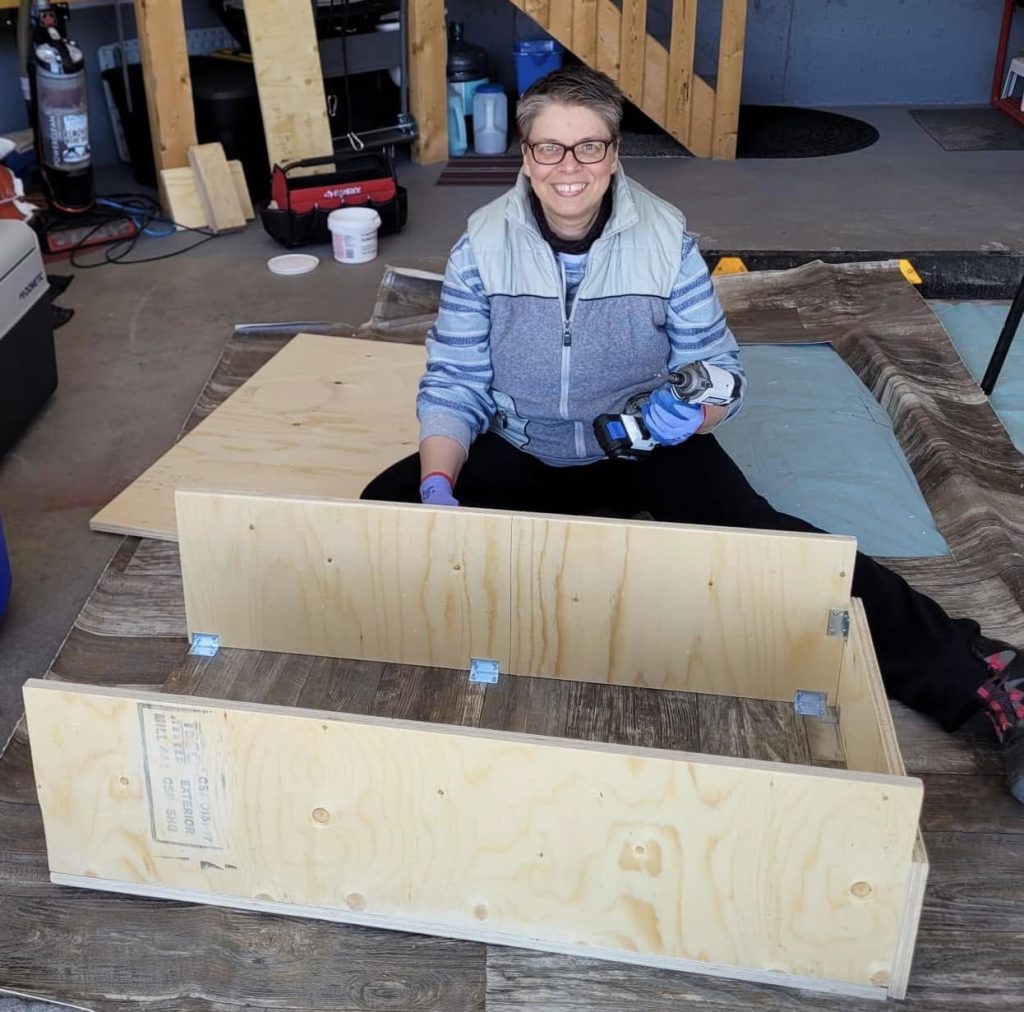
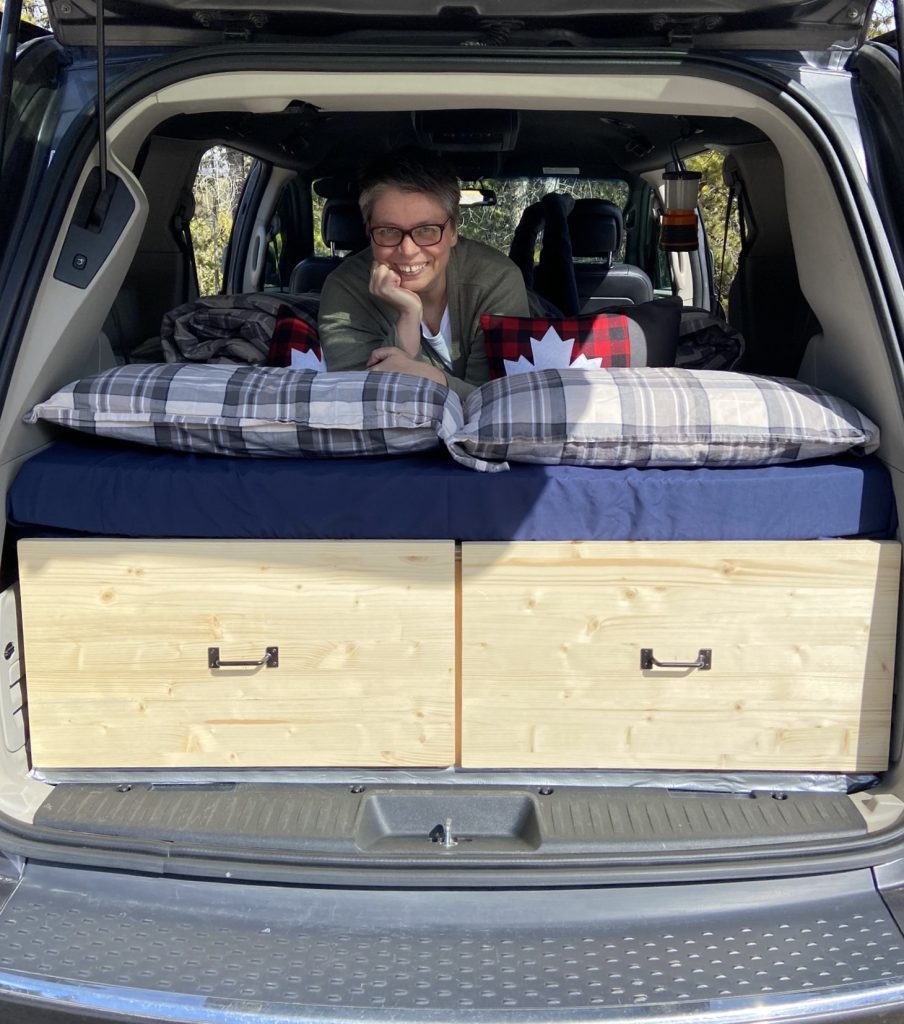
We personally bought our Dodge Grand Caravan from a dealership and then converted it ourselves to suit our needs.
Compare prices for similar car models
If you’re looking for a vehicle in Canada, AutoTrader.ca is a good place to get an idea of market prices. You can search by price, location, mileage, and vehicle type, which also makes it useful as a reference point when negotiating prices with private sellers or other backpackers.
Another important tip when looking at private listings is to be careful with extras in camper vans or traveller builds. Some sellers add camping gear and try to charge more for it. For example, they might ask an extra $1,000 for “included gear,” but used camping equipment usually isn’t worth that much. Focus on the real value of the van and be ready to negotiate.
Meet the seller
Always think about safety when meeting with sellers. Bring a friend if you can, and meet in a public place like a busy parking lot or even a police station parking area. This is a common and accepted safety practice in Canada.
Do a test drive
A test drive is one of the most important steps when buying a used car or camper in Canada. It’s your chance to feel how the vehicle actually drives and to spot problems that you can’t see just by looking at it.
When you go for a test drive, don’t rush. Try to drive the vehicle for at least 15–30 minutes in different conditions (city streets, small hills, and a bit of highway if possible).
Here’s what you should pay attention to:
Engine Start & Running
Check how the engine feels when starting. It should start smoothly without strange noises, shaking, or long delays. While driving, listen for any unusual sounds like knocking, rattling, or whining.
Steering
Pay attention to the steering. The vehicle should drive straight without pulling to one side, and the steering wheel should feel stable, not loose or overly stiff.
Brakes
Test the brakes several times. They should feel responsive and smooth, not soft or squeaky. If the car shakes when braking, it could be a sign of worn brake discs.
Suspension
Check the suspension by driving over small bumps or uneven roads. The ride should feel stable, not overly bouncy or noisy.
Electronics
Don’t forget the electronics. Test indicators, headlights, brake lights, windshield wipers, heating, and air conditioning to make sure everything works properly.
Is the car registered in the province you buy?
An out-of-province inspection is a mandatory safety inspection required when you buy a vehicle from another Canadian province. It ensures the vehicle meets the safety and road standards before it can be registered and insured.
The out of province inspection is the responsibility of the buyer, but I highly recommend to ask the seller to get it done before you buy. This can save you from surprise repair bills after the purchase, which can sometimes be quite expensive if the vehicle needs work to pass the inspection.
Mechanical inspection before buying
If the car is registered in the same province:
Once you’ve found a few good options and picked one, get a mechanical inspection before buying. Even if the van looks fine, hidden issues are common with used vehicles. A quick check by a mechanic can save you from expensive repairs later.
Negotiate the price
When buying a backpacker car, always try to negotiate the price. These cars are often listed way too high, sometimes 50% more than they’re actually worth.
Sellers do this hoping to make extra money from travellers who might not know the local prices. If you compare prices and politely bargain, you can often get a much better deal and avoid paying too much for an older, well-used car.
Sign the contract
When buying a car or camper in Canada, a sales contract is an important document.
A typical sales contract includes key information such as the names of the buyer and seller, the vehicle details (like make, model, year, and VIN), the agreed price, and the date of sale. It may also state whether the vehicle is sold “as-is,” meaning the seller is not responsible for any future repairs or issues.
Pay the seller
Be very careful with deposits. Never send money to “hold” a vehicle unless you are physically there, meeting the seller, and completing the deal properly. Scams do happen, and deposits are often not refundable if something goes wrong.
The safest payment method among backpackers is cash.
If you set up a Canadian bank account and have the funds available, you can pay with a “bank draft”.
Here’s how it works in simple terms:
You go to your bank, they take the money from your account right away, and then they give you a paper document (the “draft”) that guarantees the bank will pay that amount to the person you give it to.
In Canada, people often use bank drafts for big purchases like buying a car or camper because:
- It’s safer than carrying cash
- The seller knows the money is guaranteed (it can’t bounce like a personal cheque)
- It’s commonly accepted for private vehicle sales
So instead of transferring money directly or bringing cash, you hand over the bank draft when you complete the deal.
Insurance and registration before driving
Car insurance and registration is required in Canada before you can legally drive a vehicle.
The good news is that in British Columbia, you can get both insurance and registration at the same ICBC location, which makes the process quite convenient. However, it also means there is no shopping around for cheaper providers, since there is only one main insurer.
At a minimum, you need third-party liability insurance, which covers damage or injury you might cause to others. You can also add optional coverage such as collision (damage to your own vehicle) or comprehensive (theft, fire, or weather damage).
You can get insurance using your driver’s licence from your home country, especially when you first arrive.
As a rough guide, insurance costs for newcomers can range from about $3,000 to $5,000 per year, depending on your driving history, vehicle type, and coverage level.
Go to ICBC with the seller of the car.
When you register the vehicle, in BC you will also need to pay Provincial Sales Tax (PST), which is currently around 12% of the vehicle’s value. This is an important cost to include in your budget when buying a campervan or car in Canada.
The “value” is not always the same as the price you agreed on. For example, if your sales contract shows you paid $5,000, but the vehicle is valued at $8,000, the tax will be calculated on the higher amount.
Buying a car or camper - General FAQ for IEC participants
What documents do I need for registration?
For a typical private sale in BC, you will need:
- Your driver’s licence
- A local address in British Columbia
- The seller’s original vehicle registration document
- A completed Transfer/Tax Form (APV9T) signed by both the buyer and seller
- The vehicle’s VIN (Vehicle Identification Number), which should match the paperwork
- Payment for insurance, registration fees, and Provincial Sales Tax (PST)
Do I need a Canadian driver’s licence?
No, you don’t need a Canadian driver’s licence as a traveller to buy or drive a car in Canada right away. You can use your valid foreign driver’s licence. However, the exact rules depend on the province.
If you stay longer or become a resident in a province, you must exchange it within a set timeframe, for example, in British Columbia it’s 90 days. For more info, >> please check out the ICBC website.
Also, getting a Canadian driver’s licence can significantly reduce insurance costs. Some IEC participants report reductions of up to around 50%, although the actual difference varies widely depending on the province, insurer, and driving history.
Do I need a claim history letter from my car insurance company?
In BC, your driver’s licence is the main proof of your driving experience. When you apply for insurance through ICBC, they will look at when you first got your licence. The longer you have had a valid driver’s licence, the bigger the discount you will receive on your insurance.
To have your driving experience recognised for discounts (up to a maximum of 15 years), you’ll need to exchange your foreign driver’s licence for a BC driver’s licence.
For more info, >> please see the ICBC website
Do I need a SIN (Social Insurance Number) to buy a car in BC?
No. You do not need a SIN to buy, register, or insure a vehicle in British Columbia. However, you may need one if you want to finance a vehicle through a dealership or apply for certain financial products.
Do I need a Canadian bank account?
No. You can purchase a vehicle with cash if the seller agrees. However, having a Canadian bank account makes things easier, especially if you want to pay by bank draft or set up monthly insurance payments.
Can two people own the same vehicle?
Yes. Joint ownership is possible in British Columbia. This can be useful if you are travelling with a partner or friend and both want to be listed as owners of the vehicle.
Buying your car from a dealership
Know Your Rights Before Buying a Car in Canada
The price you see should be the price you pay
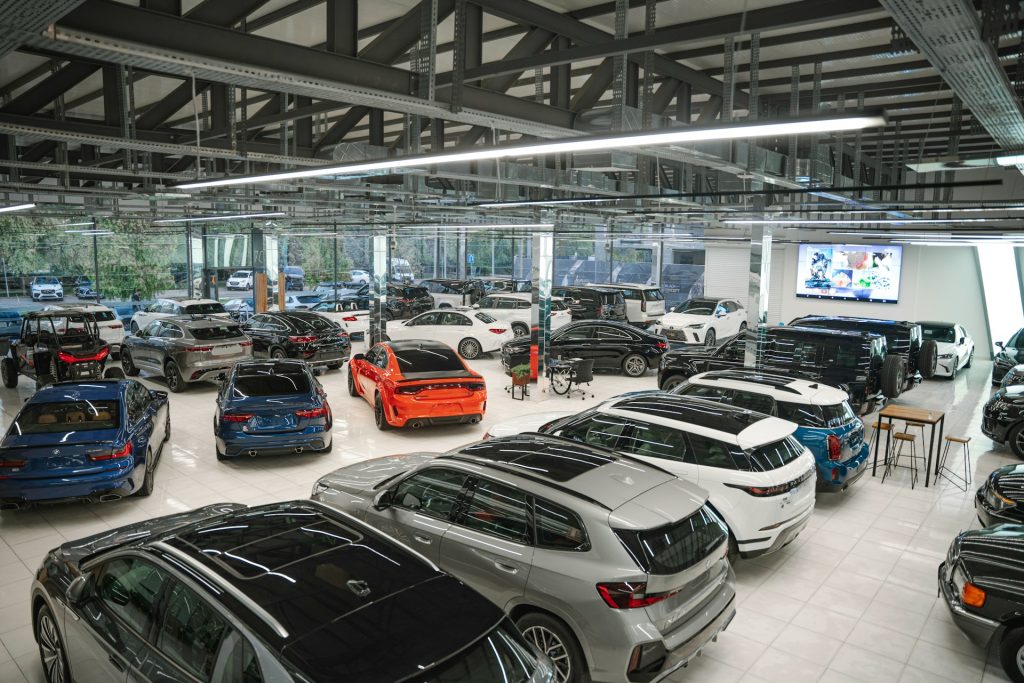
Buying a car from a dealership can be convenient, but it’s important to know what you’re agreeing to before signing the sales contract. Many buyers are surprised to discover extra charges that significantly increase the final price.
For example in Alberta and BC, dealerships are required to advertise all-in pricing. This means the advertised price should already include all mandatory fees and charges.
What should be on the sales contract?
- The advertised vehicle price
- The AMVIC fee for Alberta ($10)
- The tire recycling levy ($5 per tire)
- GST/HST
That’s typically all you should expect to pay beyond the advertised price.
Watch out for Documentation and Administration Fees
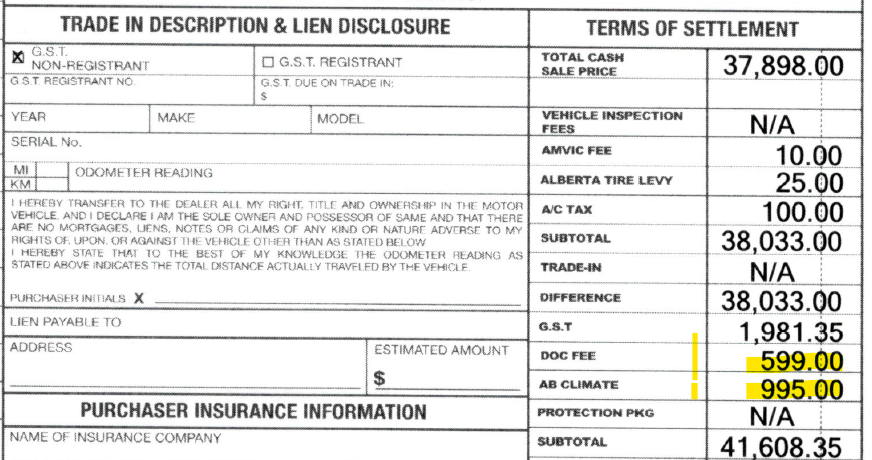
Some dealerships still add charges labeled as “documentation fees,” “administration fees,” or similar names. These fees often range from $300 to $800.
While dealerships may charge fees in some circumstances, under Alberta’s all-in pricing rules they generally should not add mandatory fees on top of an advertised vehicle price. If you see one on your contract after being quoted an advertised price, ask the dealer to explain it and request that it be removed.
My experience
When I first arrived in Canada on my IEC Working Holiday, I bought a used car from a dealership. Like many travellers, I had no idea how buying a car in Canada worked. I trusted the dealership and assumed that every fee on the contract had to be paid.
One of those fees was a $500 documentation fee. I didn’t question it and simply paid it.
Looking back, I wish I had known that these fees are negotiable. It would have saved me a few hundred dollars.
Our second experience
In 2025 we finally purchased a new car from a dealership. Once again, documentation fees and other fees were added to the contract.
This time, we knew better. Instead of paying the extra fees, we negotiated the final price of the car and asked the dealership to include those fees in the agreed price.
The result? We still paid the price we wanted, but without paying extra for the documentation fee.
Don't be afraid to negotiate
If you notice an unexpected fee on your contract:
- Ask the dealership to remove it.
- If they refuse, be prepared to walk away.
- Many dealerships are willing to negotiate rather than lose a sale.
Sometimes the strongest negotiating tool is simply showing that you’re willing to leave.
Selling your car or camper - Tips
When is the best time to sell the campervan?
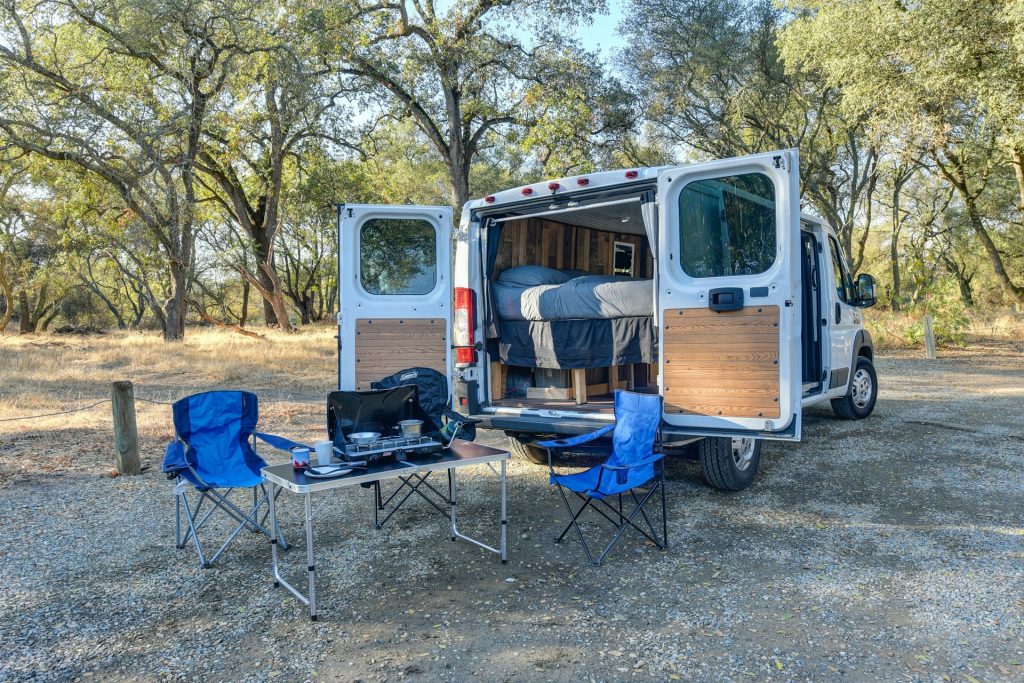
For travellers in Canada, the best time to sell a campervan is usually between March and June.
As the weather gets warmer, many backpackers and Canadians start planning road trips and camping adventures. Demand increases, which often means you can sell your camper faster and at a better price.
Here’s a rough guide:
- March to June: ⭐⭐⭐⭐⭐ Best time to sell. Lots of travellers arrive in Canada and start looking for campervans before the summer season.
- July and August: ⭐⭐⭐⭐ Still a good time to sell, although many people have already bought their vehicles for the season.
- September and October: ⭐⭐ Demand starts to drop as summer ends and many backpackers prepare to leave Canada.
- November to February: ⭐ The most difficult time to sell. Fewer people are looking for campervans, especially in provinces with harsh winters.
Start listing it earlier than you think
Many travellers underestimate how long it can take to sell a vehicle. Start advertising 3–4 weeks before your departure date, especially if you’re travelling at the end of summer or autumn when many backpackers leave Canada at the same time.
Decide what comes with the camper
If you’re including camping equipment, clearly list what is included:
- camping chairs,
- cookware,
- bedding,
- coolers,
- camping stove,
- tools.
This avoids misunderstandings during negotiations.
Price it realistically
Rule number one: don’t price your camper too high, especially if you need to sell it before your departure date. Many travellers overestimate the value of their vehicle and end up reducing the price several times later.
Check similar listings on platforms such as Facebook Marketplace, Kijiji, and AutoTrader. Compare vehicles with a similar make, model, year, mileage, and overall condition to get a realistic idea of the market value.
Make your camper easy to sell
A clean and tidy vehicle creates a much better first impression. Wash the exterior, vacuum the interior, and remove unnecessary clutter before taking photos or meeting potential buyers.
Good photos make a huge difference. Include pictures of:
- the exterior from multiple angles,
- the interior,
- the engine bay,
- the tires,
- the odometer,
- and any camper features or upgrades.
If possible, get a mechanical inspection done before listing the vehicle. Buyers often feel more confident purchasing a camper that has recently been checked by a mechanic.
Think about the province of registration
If you are selling the vehicle in a different province from where it is registered, consider getting an out-of-province inspection completed before listing it. Many buyers are hesitant to purchase a vehicle without knowing whether it will pass the required inspection.
If you own an older vehicle with significant rust, it is usually easier to sell it in the province where it is currently registered. Older vehicles may fail out-of-province inspections, which can significantly reduce their value.
A heads-up from the experiences of other backpackers: if you buy a car in Ontario and plan to sell it later in British Columbia, be aware that BC’s out-of-province vehicle inspection can be very strict.
Older vehicles, especially those with noticeable rust, will not pass the inspection requirements. In those cases, backpackers have found themselves with no option but to sell the vehicle for parts or send it to a scrapyard.
Don't add repair costs to the asking price
Just because you recently spent money on repairs does not automatically increase the market value of your camper. Buyers are generally interested in what similar vehicles are selling for, not how much you invested in maintenance.
Advertise in the right places
Facebook Marketplace is one of the most effective platforms for selling backpacker vehicles in Canada.
You should also post your listing in relevant Facebook groups for travellers, campervans, and local buy-and-sell communities. The more information you provide, the easier it is for serious buyers to contact you.
For extra visibility, buy a simple “For Sale” sign (cheap at Dollarama), write your phone number on it, and place it in the vehicle window.
Watch out for scams
Many scammers contact sellers pretending to be interested buyers. They often ask you to purchase a vehicle history report through an unknown website by clicking a link they provide.
Be cautious. A legitimate buyer should accept a Carfax report or an inspection report from a licensed mechanic.
If someone insists on using an unfamiliar website, stop communicating with them immediately. Report and block the person. These scams are designed to collect money or personal information from sellers.
My personal experience: When I sold my Dodge Grand Caravan, I received around 18 private messages. Of those, 15 turned out to be scammers using exactly this approach.
Consider other selling options
If you don’t want to handle the sale yourself, vehicle auctions can be an alternative. For a fee, they manage the sales process on your behalf. Some auction companies may even make you a direct offer for the vehicle.
If your departure date is approaching and the camper still hasn’t sold, contact local “Cash for Cars” companies or scrap dealers. Even vehicles that are no longer roadworthy often have some scrap value.
Alternatively, you can also choose to donate the vehicle to charity through programs such as Donate a Car Canada. They will issue a receipt that you can claim as donation in your tax return.
Finally, as a last option before you decide to scrap it, consider donating it to another Backpacker who is just starting their Canadian adventure. It might be the perfect beginning to someone else’s journey.
After you found a buyer
Only hand over the keys once you have received the full payment. Some buyers may suggest paying part now and the rest later, but in most cases the remaining payment never comes.
Cash is the safest and most commonly used option for private car sales. Bank drafts or certified cheques are also secure alternatives and widely accepted in Canada.
Avoid payment methods like PayPal or similar apps for vehicle sales. They can be reversed.
❗️Be very cautious with prepayment offers. A common scam is someone offering to pay in advance and then sending a third party to collect the vehicle. In these cases, the payment will be reversed, leaving you without the vehicle and the money.
If you want to be extra careful, ask the buyer to meet you at your bank.
- If they are paying with a bank draft, you can verify or deposit it first to make sure it is genuine before completing the sale.
- If they are paying in cash, you can also deposit the money right away to confirm that none of the bills are counterfeit.
Cancel your insurance properly
Once the sale is complete, don’t forget to cancel your insurance. In British Columbia, you get a partial refund if you have prepaid for insurance coverage.
To cancel your insurance and receive the refund, you will need to return the licence plates to an ICBC broker. Your refund will be issued as a cheque, so make sure you keep your bank account open until you have received and deposited it.
More information can be found here on >> how to cancel BC insurance.
Traveller tip: If you’d like to keep your BC licence plate as a souvenir from your Canadian adventure, you can do so. In that case, simply let the insurance policy expire instead of cancelling it early. Just keep in mind that you won’t receive a refund for any unused portion of your insurance coverage.